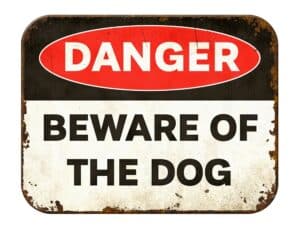
In Washington State, the Beware of Dog sign law is one of the most misunderstood aspects of dog bite cases. Many owners believe that posting a warning sign will protect them from liability if their dog injures someone, but that’s simply not true under state law. While a sign can alert visitors to potential danger, it does not erase an owner’s legal responsibility.
Washington follows strict liability rules, meaning dog owners are typically accountable for bite-related injuries, even if the dog had never attacked before and even if a warning sign was present. The only narrow exceptions involve trespassing or provocation.
At Colburn Law – Accident and Injury Lawyers, we’ve guided countless victims through complex dog bite claims, ensuring they understand their rights and recover the compensation they need for medical bills, lost wages, and emotional harm.
What is a “Beware of Dog” Sign?
A “Beware of Dog” sign alerts visitors that a dog is on the premises and could pose a threat. These signs are often posted on fences, gates, or near entryways. While they may serve as a warning, it’s essential to understand what they do and do not accomplish legally.
In Washington, these signs are considered precautionary measures rather than liability shields. For example:
- A homeowner may post a sign to prevent mail carriers or delivery workers from being startled by a barking dog.
- Businesses might use them to reduce the risk of uninvited entry into areas with guard dogs.
However, the law does not exclude an owner from responsibility because a sign was present. Courts view these signs as evidence of the owner’s awareness that the dog could be dangerous, not as a defense against liability.
Does a Warning Sign Remove the Dog Owner’s Liability?
The short answer is no. Posting a warning sign does not override Washington’s strict liability law, which places the responsibility for dog bites squarely on the owner’s shoulders.
Under RCW 16.08.040, if a dog bites someone in a public place or while that person is lawfully on private property, the owner is liable for the resulting injuries, even if:
- The dog had never bitten anyone before.
- The owner took reasonable precautions, including putting up warning signs.
- The victim ignored the sign and entered anyway.
The only recognized exceptions involve provocation or trespassing, which we’ll cover later. Simply put, a warning sign does not provide legal immunity. If anything, it may suggest the owner was aware of potential danger and had a duty to take additional steps to prevent harm.
Understanding Liability for Dog Bites
Washington’s dog bite statute clearly states liability: dog owners are responsible for injuries caused by their dogs, regardless of negligence or prior knowledge of aggression. Unlike states that follow a “one-bite rule,” Washington does not give owners a free pass for a first offense.
This strict liability rule means that victims typically do not need to prove:
- The owner acted carelessly.
- The dog had a documented history of biting.
Instead, the primary question is whether the victim was lawfully present when bitten. If so, they may recover compensation for:
- Medical costs: Emergency care, surgery, ongoing treatment.
- Lost income: Wages missed due to injury recovery.
- Pain and suffering: Physical and emotional distress.
- Scarring and disfigurement: Long-term impact on appearance and self-esteem.
The presence of a Beware of Dog sign might influence negotiations with insurers, but it does not erase liability under Washington law.
Dangerous Dog Registration
Some dogs, because of their history, are classified as “dangerous” or “potentially dangerous” by local authorities. When this designation occurs, Washington law imposes strict requirements on the owner, including:
- Registering the dog with local animal control.
- Keeping the dog in a secure enclosure with locked gates.
- Posting specific warning signs, often with a clear visual symbol understandable by children.
- Maintaining liability insurance or a surety bond.
Failure to comply with these rules can lead to fines, dog seizure, and increased civil liability if an attack occurs. For example, if a previously designated dangerous dog bites someone and the owner has not posted the mandated signs, the victim’s case becomes much stronger. This requirement is addressed under RCW 16.08.070, which allows authorities to enforce compliance and penalize violations.
Exceptions to Strict Liability
Although Washington’s laws heavily favor victims, there are limited exceptions where an owner may avoid responsibility:
- Trespassing: The owner may not be liable if the victim unlawfully entered private property (e.g., climbing a locked fence).
- Provocation: If the dog was provoked through teasing, hitting, or aggression, this can reduce or eliminate the owner’s liability.
- Police or Military Dogs: Injuries caused during official law enforcement duties typically fall under different legal standards.
These exceptions often lead to complex disputes. Was the person truly trespassing, or were they a delivery worker lawfully entering the property? Did the victim’s actions qualify as provocation? These questions make legal representation essential.
Impact on Injury Claims Involving Dog Attacks
Could a warning sign affect your injury claim? Yes—but only slightly. While the sign does not prevent liability, it can influence how insurers and courts assess comparative fault. For example:
- If a victim ignored a posted sign and entered a fenced yard without permission, an insurer might argue for reduced damages.
- Conversely, the owner’s position weakens if the attack occurred in a public space where no sign was present.
However, Washington’s strict liability statute generally outweighs these factors. Lawfully present victims almost always have the right to pursue full compensation, even if a beware of dog sign was displayed.
Why Documentation Matters in Injury Cases
Thorough documentation is one of the strongest tools for building a successful claim. After a dog bite:
- Take photographs of your injuries immediately and throughout recovery.
- Document the scene, including the property and any warning signs.
- Get witness statements from anyone who saw the attack or noticed the sign.
- Keep all medical records and expenses for treatment.
- Report the attack to local animal control, which generates an official report often critical to proving liability.
Even though a warning sign does not absolve an owner, its presence can become a point of contention during negotiations. Having clear evidence ensures you can counter arguments effectively.
The Role of Animal Control in Dog Bite Cases
Local animal control agencies have an essential role in dog bite investigations. They:
- Respond to reports of attacks and issue official documentation.
- Assess whether the dog meets the legal definition of “dangerous” or “potentially dangerous.”
- Enforce compliance with registration, signage, and confinement rules.
- Recommend corrective measures to prevent future incidents.
Their findings often serve as critical evidence in civil cases. Promptly reporting an attack to animal control protects your rights and helps safeguard your community from further harm.
Bitten by a Dog in Washington? Call Colburn Law Today
Washington’s Beware of Dog signs law does not prevent owners from being held responsible for injuries caused by their pets, and you deserve justice. At Colburn Law – Accident and Injury Lawyers, we work tirelessly to hold negligent dog owners accountable and help you recover compensation for medical bills, lost wages, and pain and suffering. Call us now at 206-823-4957 or contact us online for a free consultation. You pay nothing unless we win your case.